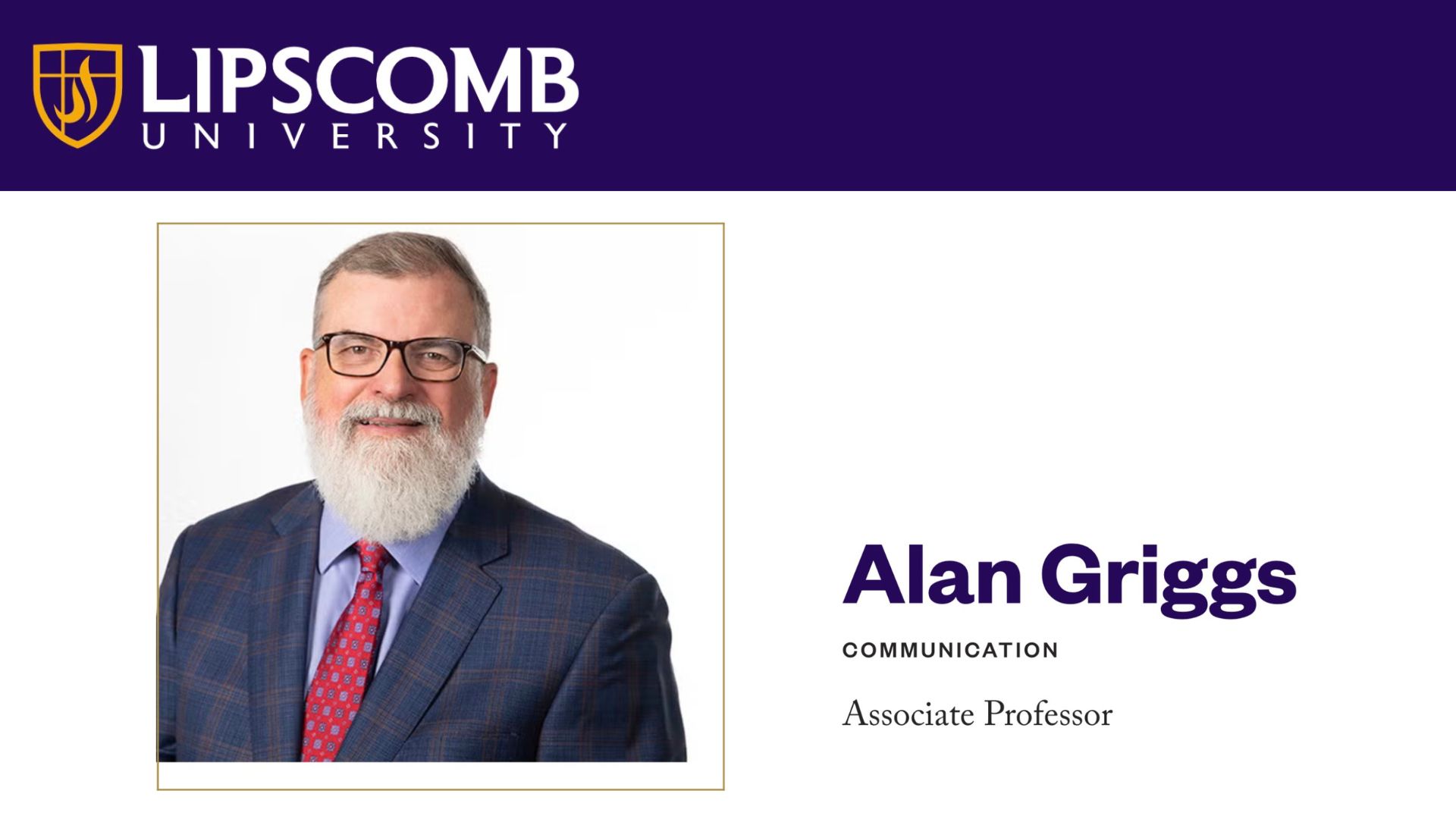
Alan Griggs, associate professor of Communication at Lipscomb University, is the Lipscomb faculty sponsor for the Spring 2026 Vienna program. Griggs curated a world humanities course called “Crisis Command: Leadership and Communication Under Pressure” which he is currently teaching in Vienna.
“It is a brand new course, and one that I created just solely for this particular time. I don’t think it’ll ever be taught again. Maybe it will, maybe I’ll get a chance to do it… I tried to combine in this course all of my passions, including crisis communication, effective leadership communication, and find some notable people in history and how all of those three elements came together. Fortunately, I think I have a very good class. It’s only six, but I’ve got some real good thinkers in there, and they’re not shy about giving me their own opinions,” Griggs said.
“It’s about how leaders have communicated in trying situations… situations involving the lives of millions of people or thousands of people, and it could be somebody on a battlefield, or it may be a president who had to make a crucial decision about dropping a bomb, or it could be a statesman who had to deal with overwhelming odds against what his country was trying to do. It could be a woman leader, as it will be, who communicated with empathy during the covid crisis. So I find that that’s sort of my wheelhouse. I find that fascinating, how leaders communicated in crisis situations, because there’s a very bad way of doing it, and there’s a very good way of doing it. And I picked about eight different leaders who are doing it not the perfect way, but enough of the right way to make a positive impact on the world,” Griggs said.
In the classroom, Griggs is an open book and encourages his students to get to know him as he would like to know them.
“I really just try to be myself, and I think that helps set me apart as well, that I want to genuinely get to know them as much as they want to open up to me, and vice versa. I’ll open up to them. I tell them that by the end of the semester, not only will they be better and they will know more, but they’re going to make me a better person too. And again, they all seem to appreciate that, so we’re in it together. I can be their friend, I’m certainly going to always be their professor, but I don’t have to be an authoritarian figure who knows it all. I’m a pilgrim just like they are,” Griggs said.
After spending roughly forty years in broadcast journalism as a reporter, anchorman, and eventually a news director, teaching is Griggs’ second passion.
“My chosen career was journalism. I grew up watching the news on TV many years ago, and sort of evolved into loving current events. And I loved history and really enjoyed writing, sort of had a natural flair for that. And when you combine all of those, they really contributed greatly toward my choice of going into broadcast journalism,” said Griggs. “I was on the air every day, either as a reporter or an anchor, more as a reporter, but at times as an anchor, you know, it would vary from day to day,” Griggs said.
On his introduction to teaching later in life, Griggs said:
“I got into adjunct college teaching a little bit later on, and that sort of whetted my appetite for teaching on the college level later, and I sort of had a natural ability to teach in the college classroom,” Griggs said. “I had a friend who invited me to come teach at Tennessee State University… I did that for three years and thoroughly enjoyed it and then another friend asked me to come over to Lipscomb… I never really thought I would teach at Lipscomb, I wasn’t Church of Christ, but I am now, and so I agreed to do that, and I’ve been there 15 or 16 years now.”
Griggs’ time at Lipscomb also became spiritual when he faced a family tragedy.
“I met a lot of really good people at Lipscomb. They had a strong influence on me… We lost our son to depression… I think it was 2005 when he died… I sort of went into a spiritual wilderness… I followed through on some friends’ suggestions to try the Church of Christ, and I did that and was baptized. I like to say that I’m really sort of Bi-denominational now at the Church of Christ, and I go to the United Methodist Church. My wife is a United Methodist pastor, and I grew up in the Methodist Church, so I go to both of them, but the Church of Christ gave me a real anchor at a time when I needed it,” Griggs said.
Griggs spent many years at Lipscomb University in the communications department, and this semester will be his last before retiring. Looking back on his career in education, Griggs said:
“My teaching career has given me a renewed optimism in our future generation. I’ve met a lot of really good, smart, nice, young men and women who are not only passionate about what they want to learn, but are very open about their feelings and they work hard, and they want to learn, and they value their time getting their education… 98% of the students are just wonderful young human beings. I would say the future generation is in good hands,” Griggs said.
Griggs is an educator that provides knowledge for his students to succeed in their careers and beyond; he consistently pushes past surface-level course material to give them a deeper, more meaningful understanding.
“I impart knowledge, but I don’t stand up there and lecture on and on and on. I involve the students in discussion and good debate. They can disagree with me, I tell them that certainly, I welcome that. We have good open conversation about whatever the topic is. But I talk about life too, and I talk about my son who passed away. I talk about the fact that they are not bulletproof, these young people,” Griggs said. That they should cherish every moment that they have on earth and that if they were fortunate enough to reach my age, 75, they will realize that time goes fast, and they should make every moment count. They’re not bulletproof, as I said, but at the same time, I’m very optimistic, and tell them they have that whole wide world before them, and to not limit themselves to thinking ‘I can’t even think about…’. Well, yes, you can. If you believe strongly enough in what you want to do, you can do that. And so the world awaits, and it’s a wonderful place to be in. I try to give them some of the life lessons that I learned and some of the mistakes that I learned so that they can avoid those, and the vast majority of them are very appreciative of that and value what I have to say, and I’m grateful for that.”
As Griggs approaches retirement, he considers his next steps.
“I want to help people. Yeah, I’d love to tutor kids. You know, I can. I’m not great at math, but I can tutor them in reading and writing, and a lot of them need that. But I will miss teaching a great deal, and I’ll miss being in the classroom and communicating with young people… who have great questions and want to listen to the experience that I’ve gained over the years. It’s been a wonderful ride, truly,” Griggs said.
Hayley-Kate Nelms, a sophomore majoring in theater design and production at Lipscomb University, is taking Griggs’ course in the Vienna program. Nelms explained her experience in the class so far.
“His course was specifically made for this semester. It’s never happened before, it will never happen again. It is specifically for this group at this time, which is really cool. But yes, he created the class, and it’s very discussion based, which I like, we basically have a world leader or someone that we’re supposed to study, and then during that class we’ll discuss the world leader, the situations and the conflicts and everything that they dealt with, we dive into a lot of really hard topics. “He has little pockets where he lectures at the beginning of class… For the most part, he pretty much just poses questions and then lets us talk, and then asks us questions about our response, and challenges us to think deeper,” Nelms said.
Students in Griggs’ courses notice the effort and intentional thought present in his class material.
“I think he definitely invests himself into his students. At the beginning of the semester, I said something about how I love Shakespeare, and he was like, ‘Have you heard of this guy who was Shakespeare’s rival?’ I hadn’t, and then two or three weeks later, he’s like, ‘Hey, I have a book for you’, and it was about the rival. So I think he definitely notices the small things and wants to invest in his students on a personal level too, which I appreciate”, Nelms said.
Nelms praised her professor for his ability to offer constructive feedback and positive reinforcement in an authentic way.
“He’s not afraid to hand out praise, but also, I really respect how he challenges us in our thinking, and challenges us not only for the class, but to just inform ourselves about what’s actually going on in the world so that we can therefore have better informed decisions and opinions. He’s not afraid to confront the hard things,” Nelms said. “I think something he wants us to realize is what goes into being a good leader, integrity and credibility and being selfless, he’s wanting us to see those kinds of leadership qualities, and also be informed. People who seem insignificant can cause such big change. And I think he wants us to see that we can be the change we want to see.”
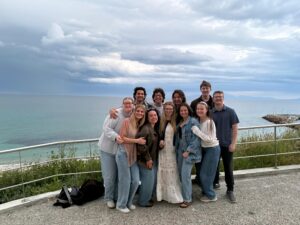
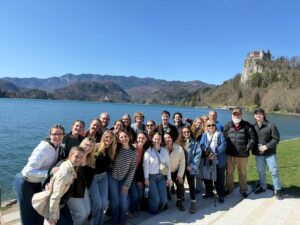
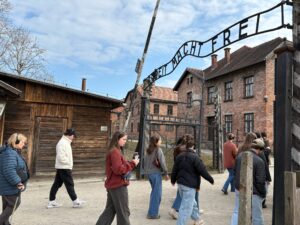
Griggs has been an impactful educator not just on the campus of Lipscomb University, but also on the global campus of the study abroad program in Vienna.

Be First to Comment