Every week, The Talon interviews a member of the Oklahoma Christian University community, a “Newsmaker,” to answer questions about their role on campus.
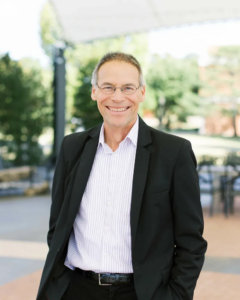
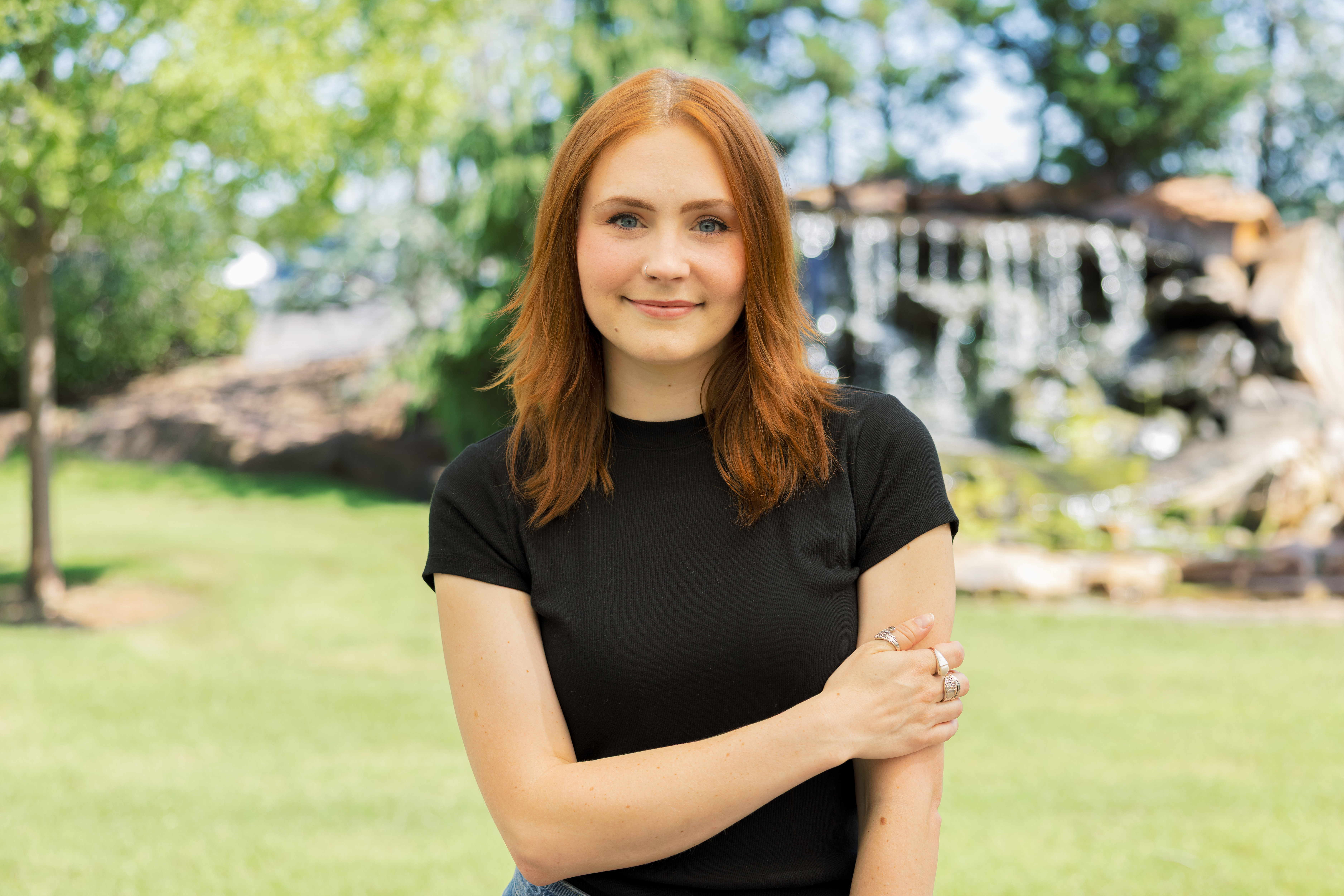
On April 6, The Talon interviewed Spoken Gospel Founder David Bowden.
What is Spoken Gospel?
“Spoken gospel is a nonprofit ministry that helps people understand their Bible and how it is all about Jesus. We exist to create free, gospel centered resources that come alongside a Bible reader in whatever passage of the Bible they are trying to understand. We explain the passage to them and then show how it all connects to the personal work of Jesus. We try to think of ourselves like Philip when he meets the Ethiopian eunuch in Acts 8. He has scripture access so he is reading the Bible, but he doesn’t understand what he is reading. God sends Philip next to him, and says, ‘Do you understand what you are reading?’ And the Ethiopian says, ‘How can I unless someone teaches me?’ As evangelical Christians, we tend to feel like it is me and my Bible and I have to understand it or something is wrong with me, that is just not true. Everyone needs a teacher, we are trying to be the teacher who comes along and starts where they start. He was reading a specific passage in Isaiah, 52- 54 and he wanted to know who this man was. It is all about how God will take the childless, barren and the eunuchs, who cannot have children and make a mighty nation out of them. The eunuch reading this says, ‘Who could do that for me? Who is this about?’ It says in the beginning of the passage, he preached to him the good news of Jesus, and He showed him how in Jesus’s kingdom, even the barren and the childless and the eunuchs can be fruitful and multiply as they spread the news of His kingdom to the world. He got baptized after that. It is cool to see how simple Bible engagement and helping someone understand what they are reading can lead to a life of transformation. That is what we are trying to do.”
What inspired Spoken Gospel to recently open an office here on campus. How does it tie into your own experience from whenever you were here?
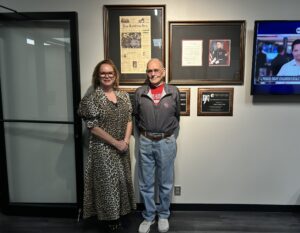
“I was coming on campus to meet Dr. Jones for the first time back in August of 2025. I got to campus early, I was praying and walking around. I was almost to University House on the sidewalk, and just felt like God was saying, ‘Move your office here.’ I was thinking, ‘Why would I do that? We have a great office space, we still have a lease on it, we have more than enough space. Why would I do that?’ I started realizing all the benefits of being on a campus like this, and we could be with students. The campus is way prettier than where we were. There are amenities of being able to experience and enjoy campus. Then, also the relational and missional aspect of getting to have interns and students who are passionate about making a difference in the world, teaching the Bible, using social media, video and podcasts, to spread the Gospel. Teaching them how to do that, equipping them to do it, would be cool. My brain started filling up with ideas of what we could do. I go to the meeting with Dr. Jones thinking, ‘Do I bring this up or not?’ We start talking, and he learns about Spoken Gospel. And I just felt like the opening was there. I was like, ‘Can I just tell you what I felt like God was saying to me today on campus?’ and I shared it with him. Dr. Jones, just said, ‘You know, there are a few times that I have seen God move in real time. Most of the time, you don’t notice it until it is retrospective. This is one of those times. We want to do everything we can to get you guys on campus. I want it to be totally free for you.’ So immediately, John Hermes just started taking us around, looking at every available spot, and within a week, they had picked this spot here in Garvey for us. I did not know this video studio existed. So they said, ‘Hey, there is this office that used to be the Talon. You can take it over and also it’s connected to a video studio.’ We’ve been praying about that for over five years, that wherever our next office was, we wanted it attached to a video studio, but it seemed like we’d have to build it ourselves, which was a multi-million dollar project. The fact that God already had it for us and sent it to us, was crazy. Thinking about my time on campus and how it’s reflected now, this was a time in my life when I was able to dedicate so much time to forming my theological worldview as a Bible student and spending way too much time in the library just reading and thinking. Now, this is where I get to do that day in and day out. I get to nerd out about the Bible and it bring me back to my relationships that I had here when I was a student. Now, so many people are now faculty or they’re leading different departments, or some of my teachers are still here. It is fun being in this cool community environment to continue to study scripture, like I did 15 years ago in my undergrad, so it has been special.”
How will the new OC office support your work at Spoken Gospel, and what opportunities does it create for students or the campus community?
“The video center is huge for us. Typically, organizations like ours have to go and rent studio space in order to film any kind of production. There, you are fighting the clock, because every day you’re paying for the studio space. Sometimes, you are not even allowed to do multi-day bookings, so you have to get in, load-in, set-up, and hopefully the set is what you think it’s going to be. You get it filmed then it is ‘Sorry, no more time for filming.’ It is just very stressful, and it is expensive. Having a space that we can tarry in and be patient in, and let things breathe and let sets develop is huge. For us, we were able to film, which means we get higher quality production at a way less cost. This means we’re bringing better and more content to the people. Even for our team, we have noticed the dynamic of being on a campus has radically changed how we office together. Before, when lunch would come we would all split up. Some people brought their lunch. Some people would warm it up at 10:30, some people would eat at 1:00, some people go out to eat. Now, we just walk to the cafeteria together every day now, and it is sweet. It makes it feel like we are more of a team, we just spend more time together, which is weird that something like lunch keeps us coming together more. Being on a campus that’s full of community and people spending time together has rubbed off on us and made us do that more; it is affecting our culture in a positive way. Also, now we are around students, and so we are already starting to see how we will have students come in and get to know us. We have had a student who is a Catholic, and he has been so helpful for us as we are thinking through our church calendar series. While it is a bigger step for Protestants to be ‘Wait, what day is it on the church calendar? What is Eastertide? What is Advent? What is Lent?’ He lives this thing. He has been helpful in that. And he is just a student who popped in one day and wanted to learn more about Spoken Gospel. We are already benefiting from the intellectual and spiritual community that is here and it will be really cool as we start to open intern opportunities in marketing and media and theology, etc. for people to come and learn. Our hope is that they’ll be able to take on meaningful projects. We want them to be a project-based internship and not like a task-based internship. We know that students are capable of a lot, so giving them a platform to make something would be cool.”
Looking beyond Spoken Gospel, what personal or creative goals are you most excited to pursue in the coming years
Right now we are working on something with a publisher to take the half a million words in the Bible that we have written over the last seven years and turn it into a single volume commentary on the whole Bible. We hear a lot of questions about which commentary should people read, and most of the time, it is an impossible question to answer. It depends on what book you’re reading. It depends on what you are trying to use a commentary for. It depends on your level of education. Can you read Greek, for instance, or Hebrew? The same series might have a great author for judges, then one that I do not find helpful for Joshua. We are really excited to be able to hand somebody one book that can be a commentary for the whole Bible, no matter what faith tradition they come from, no matter where they are in their journey, whether it’s scholarly or layperson, it will be accessible and helpful. We are of course doing a church calendar series. Right now in the studio, we have our ascension of the Pentecost set. We took the icon of Pentecost that the church has used for a long time and brought it to life as a set piece. Over the next couple of years, we will do the whole church calendar. A little short teaching video for every day, grounding it in scripture and in the rhythms of the church, to help people, especially from different traditions that do not have that kind of network of support. The point of the church calendar is that it is always holy time. We are also going to do a “Top 100” and “Bottom 100” verses of scripture.
The top 100 being the verses that are on all the coffee mugs, that are just ripped out of context and made to say what people want them to say. We are calling the front door into scripture, but then there is the back door out of scripture too, which are the bottom 100 verses. These are the things that make people leave Christianity or lose trust in the Bible. Like misogyny, homophobia, genocide. We try to answer it and talk about it. The most exciting thing we’re doing right now is translation. We just launched in Portuguese last week on our website. We now have a full Bible commentary in Portuguese, the goal is to be in 10 languages by the end of the year, and 100 languages in the next five years. We also launched a Google translated version of our devotionals in Spanish a few years ago, and within nine months, it outpaced our English traffic on our website. It is difficult because when you go outside of English, the resource level just drops dramatically, and there’s almost nothing. We want to fix that and help people have at least something that could be helpful for them to understand the Bible, so 100 languages in the next five years is the goal.”
What do you recommend students doing if they want to get involved with Spoken Gospel?
“There are three things I could say. The first is to start using the content. It’s absolutely free, and we think it will absolutely revolutionize the way you understand and read your Bible. Our goal is to help them be transformed into Jesus’s image by beholding him in Scripture. We want to change the way they read the Bible and see how it is about Jesus and not them. Download the Spoken Gospel app, it is free. Use the YouTube channel, use the website, use YouVersion. Just come and do it with us. We have a quiz you can take on our website, and an even more robust one on the app that when you take the quiz, we will recommend a book for you. Number two, when I was on campus here, one of my favorite things to do was partner with nonprofits. You can put on an event or sell art, have a poetry night, an open mic night, sell baked goods or whatever, and help support us. We are 100% donor supported. That was one of my greatest joys in college, I didn’t have any money, but I could galvanize other people to raise money to drill a clean water well. Now, we can do it to then invest in our reach, to reach people who don’t know how to read their Bible and help them understand. Number three is if you have invested in what we’re trying to do. I would say, stop by the office and come see how you can get plugged in. If you’re passionate about theology, media, marketing, development, software, and you want a way to help, come brainstorm with us and we’ll try to do our best to put you to work.”

Be First to Comment