
Every week, The Talon interviews a member of the Oklahoma Christian University community, a “Newsmaker,” to answer questions about their role on campus.
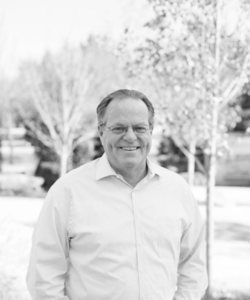
On September 10, The Talon interviewed Brian Simmons, dean of the College of Liberal Arts; program chair for communication; division chair for language, literature, and communication.
What inspired you to pursue a career in communication?
“So, back in the day, there was this thing called radio… somewhere along the way, probably in eighth, ninth grade, I listened to the radio all the time. We had these disc jockeys that were on for morning and afternoon drive, and they were popular. I thought that was so cool, right? I wanted to play rock music. That’s awesome, you know. And so I wanted to get into radio, and when I thought about where I wanted to go to school, I could have gone to Oklahoma Christian, or I could have gone to Harding, or I could have gone to Abilene Christian or Arizona State. Well, I didn’t want to go to Arizona State because it’s a huge, huge school, and I wanted to go someplace that actually had an FM radio station at that time. Probably still to this day, Harding only had what they call carrier current station, which is kind of through the piping of a building, and Abilene Christian had kind of the same thing. Well, [Oklahoma Christian] had a full-blown FM radio station. It was a jazz radio station, and I’m like, oh yeah I could do jazz. And so I came to Oklahoma Christian to be a communication major, I was actually a mass communication radio TV major because I was going to be in radio. So I came here my freshman year, by the second week of class… I auditioned and was selected to be part of the radio station staff. And so I said, I want the 6 a.m. to 8 a.m. shift. Give me that puppy, because that’s morning drive time. That’s when the best people are on the air. So, as early as the third week of my freshman year on campus, I would walk through the door down here at the end of the hall, and I thought that was the coolest thing in the world because it’s like, I’m an 18 year old kid and I’m on an FM radio station, playing jazz, but that’s okay. And so it’s really odd to me because I walk through that same door every day when I come to work here, and now I’m the dean of the college of liberal arts and I chair the communication department and I teach, and this is going to be weird… I mean, technically, on the organizational chart, I’m the boss of Dr. Patterson and Dr. Lowry, two people that mentored me, encouraged me, and taught me most of what I know. Life is funny. So from there, I branched out away from just radio TV because I had fallen in love with a girl here at OC freshman year… Well, I proposed to her in December of our senior year, and it dawned on me, I cannot look my future father-in-law in the eye and say, ‘Hey, can I marry your daughter? I want to be a disc jockey.’ And so a couple of people who were here, including Dr. Patterson, a guy named Dr. Larry Germany that you may have heard of, and a guy named James Hobart who was the debate coach at the time, encouraged me to consider going to graduate school. I thought, I could do that, so I was able to secure a full ride scholarship to Pepperdine to coach their debate team, and that exposed me to a broader array of communication courses. And then from there, I got my first teaching job at a small Catholic school in Indiana… I taught some broader comm classes there. I ran a campus radio station. Like a real rock station, it was awesome. And then I went to Purdue and picked up a PhD in communication and the sociology of religion, and broadened my communication from there. So it’s kind of a winding journey, and because of that, I can’t say I was called to be a teacher. I mean, the Lord never appeared to me in a tortilla, or He never spoke to me in a loud voice and said, ‘Brian Simmons, be a college teacher.’ I just kind of fell into it. I could have been an electrician, or I could have been the play-by-play guy in Monday Night Football. That was my fallback plan. That didn’t happen, obviously. And so I’m a communication teacher, and I think it’s a good fit because it has blessed my life. I just said to one of my students yesterday, I said, I wonder if I would be as good of a husband and a parent if I was a plumber or an electrician and didn’t know all this communication stuff I talk about in my classes. I think I’m a better husband, a better person, a better parent, because I teach all this communication stuff. Not that you can’t be a good parent if you’re an electrician or a plumber, you know. You can, but I think it’s easier for me because I try and practice in my marriage and in my parenting and my interactions with all of you what I preach in communication… But as Ecclesiastes teaches us, there’s a time for everything… I’ll tell you, I feel some guilt because our department has changed over the years from when I was here. It’s smaller in terms of number of students, it’s not as expansive. So the radio station that helped pay for my school here, I dismantled piece by piece two summers ago. Like literally, screwdriver, pliers, hammer, sledgehammer, and dismantled it. I mean, I processed the paperwork that sunsetted the degree that I got when I was a student here. That’s hard. It’s really hard. And yet, I recognize the wisdom of Ecclesiastes. I recognize that what we’re doing here is just not what we used to do in the 1980s. But man, what we do here is still really good, and hopefully, all of you at this table and whoever reads this article is benefiting from that. And hopefully, what we’re teaching you is that just as the Bible teaches, the race is not to the swift, nor the battle to the strong, but time and chance happen to them all. You can be small and still be really good.”
Of all the positions and jobs you have, which one is your favorite role and why?
“Teaching students in Garvey Center 113. That’s my absolute favorite. I will die in that classroom, probably shock your children when they come here to OC. No, I’m serious. That’s where I want to be. I mean, I feel like I do a lot of things around here, and I have done a lot of things in the 12 years that I’ve been here, but at the heart of it, I’m a teacher. I wish I could say I was called to be a teacher, but I sort of fell into it. And because of that, although I feel like I have gifts and abilities, and I’ve been given opportunities to do administrative stuff and run some chapels and that kind of thing, the heart of it is the teacher because I like to think that what happens in the classroom is like the tip of the spear. Everything else we do here points to the classroom. I mean, clubs are great, athletics are great, chapel is great, but at the end of the day, it’s still a university, and that means the tip of the spear is the classroom. And so I love it so much, and I am more happy there than anywhere else. That’s why I’m so giddy on the first day of school in August because I haven’t been able to teach for so long. So for me, it’s the classroom and teaching the students.”
What has caused you to have a special interest in apostates and those who lose faith in Christianity?
“It’s because I’ve been working with people in their teens and 20s for a long time. At church, I’ve always worked with junior high kids because I have a special heart for them… I have a heart for young teenagers, and tried to help them through the difficult years. And then, because I’ve been teaching college for 38 years, this is my 39th… and I’ve just seen too many of my students not retain their faith. And because I’m also an educator and a researcher, and because my doctorate was in the sociology of religion, I’m uniquely positioned to actually say, well, what does research say about all this, right? And so the books that I wrote were designed to take all that academic research that’s not really accessible for a lot of people because of where it’s located, or these obscure journals, and because it’s kind of written in academic prose, it’s hard to read, and I wanted to put it into a user-friendly format so that a Bible class could, you know, purchase 15 copies of it and read a chapter a week and talk about it on Sunday morning at 9 a.m. And I also wanted to write something that a parent or grandparent could use to help understand what’s going on with their kid in their 20s. In fact, I had a conversation right over there in the hall this afternoon with a guy that said, ‘Hey, I’m halfway through your book’, and he got the book because he’s trying to understand the changes that his daughter is going through in her faith, and she’s here at Oklahoma Christian, and so I have a heart for that because I feel like I’ve been trained to speak into that, and it intersects my passion and my experiences, and at the time I had written the first of those two books, and even the second for that matter, nobody else was really writing about it in that manner. I mean, the research was writing about it. It was not accessible. It was in academia, but it wasn’t really in the popular press, so to speak. And so I just wanted to do that. And so I’m proud to tell you that every July I get a royalty check from Abilene Christian University Press, and I’m happy to tell you that this past year I made 25 cents. In case you’re wondering, I never made more than a couple hundred bucks off of it.”
What was the inspiration behind starting Taking Sides Chapel?
“Some students came to me and said, ‘Hey, Brian, we would like to do some kind of a debate thing, an intercollegiate debate’, because I did that when I was here at the university. It helped pay for my undergraduate degree. It paid for all my graduate degree at Pepperdine, my master’s degree, and I also coached debate at the University of Portland, where I taught immediately before coming here, so I had that kind of background, and some students were interested in that, and they came to me and said, ‘Hey, can we start that back up?’ Well, as Paul says in Romans, they have much zeal without knowledge, and they didn’t quite know what all was involved in that, and so I just didn’t have the bandwidth in my life to do that again. Plus, that activity had changed so much since I did it back in the 1980s that I questioned the educational value of it, and so I said, ‘Well, hey, let me give you a counter proposal’, and I suggested doing Taking Sides Chapel because at the University of Portland, I actually created something like that. It wasn’t a chapel, but it was what we called moderated debate… two speakers, one moderator, me or another faculty member, and it went over really well. So I said, how about if we do that? Because to me, in chapel or elsewhere, that’s what a university should be doing, which is what I often said in my intro to Taking Sides Chapel if you saw it, and so it really was student originated, and I just gave them encouragement and I gave them some structure and I tried to help keep it going as long as I could. Then finally it got to the point where after about 10 years we just didn’t have enough students that could commit to it on a weekly basis because it takes a lot to make Taking Sides chapel happen. It takes a lot, and by that I mean it takes the commitment of a large enough number of students so that the same two people aren’t standing up every Thursday or Wednesday to do Taking Sides Chapel. We have to devise the topics and we have to then devise the arguments on both sides of the topics, and we have to choose who’s going to stand up and prepare. And then once we’ve done all that as a group, the two people who stand up and actually speak have to go off on their own and kind of predict what they want to say, and kind of create it so they don’t look foolish and so they’re effective. That’s a lot, and we had just shrunk to the point where it was unfair to the five or six students that continued on with it, and so one of the lessons that I’ve learned in life, about 15 years ago, is that ministries have a life cycle. Or as Ecclesiastes says, there is a season for everything under heaven, a time to live and a time to die. So I just thought, ‘the time has come to sunset Taking Sides Chapel’. Now I would rather have kept it, but I’m comfortable doing that. And already there are a couple of students on this campus that want to come back and resurrect it, like the phoenix from the dead, or Jesus. And so they’re scurrying around trying to get me a list of at least 20 people that can commit… I tried to do what I can to encourage and support students and what they want to do… that’s why we’re doing other stuff like departmental chapel this year for the first time in a long time.”
How many times a season do the Raiders make you question why you’re still a fan?
“Never. Ask Dr. Patterson how many times has reconsidered the choice of who he married. Never. Ask me how many times I reconsidered having my kids. Twice, but anyway. No, I’m just kidding. Here’s the true answer… So when I was a kid, I grew up in Phoenix, Arizona. When I was growing up in Phoenix, there was no professional football team in Arizona at that time. And so when you’re a little kid and there’s no professional team around, you clam onto whatever team is winning at the time. And I know you find this hard to believe, but the Raiders have actually won three Super Bowls and played for another one. And so I became a Raider fan, and I value loyalty in people because I believe that loyalty, although it’s not labeled as such in the Bible, is a pretty key virtue. Jesus is loyal. If nothing else, God is loyal. Now the Bible calls that faithful, right? Our God is faithful. Great is thy faithfulness. You know, faithful love, coming down, all that. And I value loyalty, and so I believe that to be a sports fan is to become a fan of a team, and you ride with it, ride till you die, thick and thin. It is like a relationship for me. It’s like a relationship, and there are good days with my wife, and there are less good days with my wife, and there are good days with my kids, and less good days with my adult children, and so I’m a Raiders fan, for better or worse, for richer or poorer, in sickness and health, until death do us part. Is it a dysfunctional relationship? Yes. Does it sometimes feel like a real abuse? Yes. Okay. Each year they say, ‘I promise we’ll be better,’ and they never are. And as the proverb says, as a dog returns to its vomit, so does Brian return to his fandom. But I hope that in talking about it, as I am now, when people ask me… I hope they hear me say something about loyalty.”



Be First to Comment