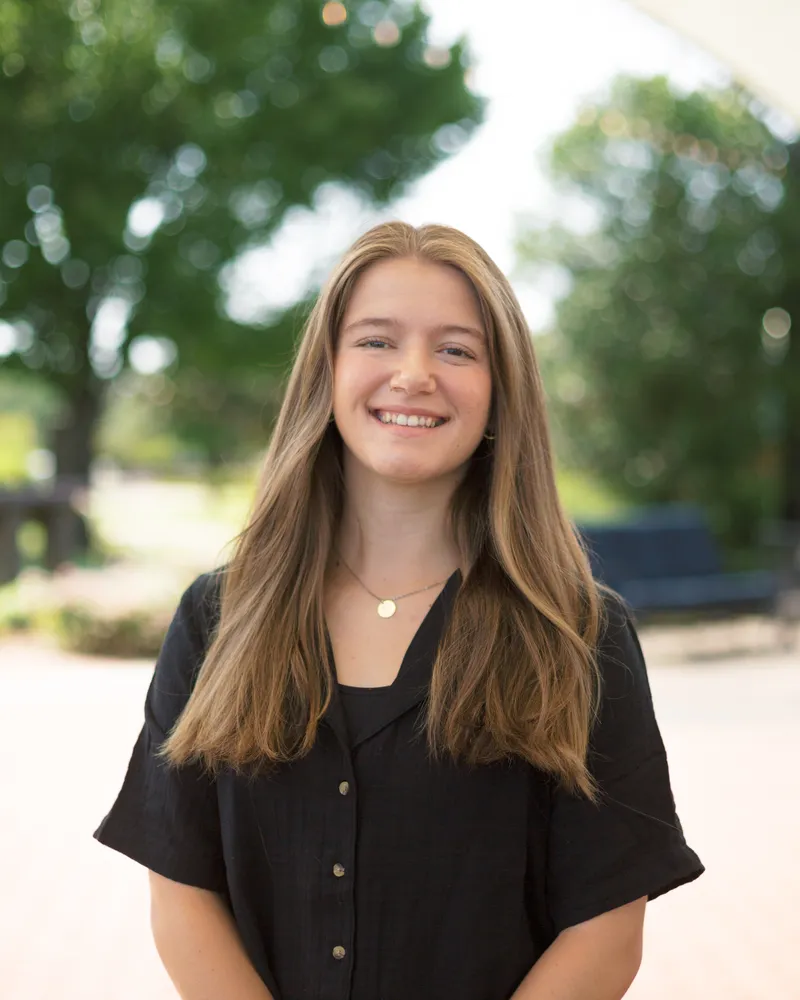
Every week, The Talon interviews a member of the Oklahoma Christian University community, a “Newsmaker,” to answer questions about their role on campus.
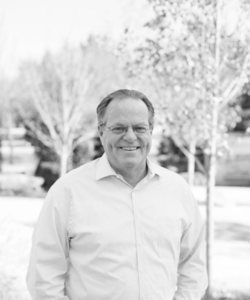
On Sept. 24, The Talon interviewed Emily Brackett, the Oklahoma Christian student leadership coordinator in the student life department.
Tell us about the capacity of your position, what roles specifically fall under your job description?
“So my roles on campus, pretty much if there’s student leadership involved, I’m the oversight, with the exception of spring sing. So all of your academic clubs, student organizations, and special interest clubs, I help kind of guide them to what they need. I also oversee all of OC’s social club or Greek life, and then I also oversee homecoming.”
What is the most enjoyable part of working with the clubs?
“I really enjoy honestly just getting to work with all the students, especially in their leadership positions, because I get to support them to help them succeed. Because a lot of times, any person that’s coming into that role, whatever officer position it might be, that’s their first time in that role, and a lot of times they don’t have someone that has been in that role above them that’s still in their club. Especially like looking at the presidents, a lot of times that’s a senior, and so the senior before them is no longer here, so I kind of have to help them walk through that. I love getting to foster that relationship with them to help them succeed in the best way they can, and also make their ideas come to life. Because a lot of times I’m pretty open to changing things year to year, and so if they have a good idea, I help them make that happen. So to me, the most enjoyable part is just getting to work with them.”
How do you deal with clubs feeling like there might be biased attitudes towards other clubs?
“Well, so kind of my biggest thing that I look at if someone comes in, one of the biggest things last year that I learned is to ask, is someone coming in because they’re complaining, or are they coming in because there’s a problem. Kind of the best way I look at it is sometimes people come in because they just have something on their mind and they need to get it out, and someone needs to hear them. But a lot of times, especially in today’s day and age, everything’s on social media, and everyone’s… more introspective to what other people think of them, and so a lot of times someone will say something and they take it very much to heart, even though that’s not what someone meant. And so a lot of times I take it: is it complaining or is there a problem? And the best way I know how to differentiate those two is if you come to me with something, do you have a solution? Because if you have a solution to that, then it’s a problem. If you don’t, then you’re probably just complaining. But I try to look at that because truly, I have no bias. I don’t care. I have no stake in the game, and I want everyone to succeed. But I do understand that depending on how you are feeling and how you feel within your club, you can view if there’s bias one way or another. But I could point out bias that I feel that clubs have within themselves towards other clubs, but also sometimes I think everyone thinks the same about everyone else, and I see a lot of that because someone will come into me and complain about one club, and someone else will also complain about the same thing, and I’m like, you guys had the same problem, and so I’m like, how do we work this out? And is there really a problem, or do you guys just hyperfixate?”
What are you most excited about this upcoming semester?
“For this semester, I’m really excited for homecoming because there’s a lot of change happening with it, and one of the biggest things with the change in how rush is working, and it starting this semester and it being at the time it’s at, I really wanted homecoming to be less on the clubs in a lot of ways, and so I changed up a lot of what homecoming week looks like itself, so that the clubs participating just get to enjoy homecoming week versus actually having to show up and do a bunch of stuff. So honestly, most of the week it’s for them. They get to show up and have fun, other than they’ll have to do a little bit on our community event on Friday, and I’m also really excited about that because we’re pairing with the alumni relations office here on campus to create more of a community event. When I was here, we did this thing called Fall Fest, and it was a huge community event. It was during COVID, and so it was just all the people on campus and people that worked here, and it was just a big festival. And so I’m kind of trying to mimic that for Friday, so that we have something that isn’t just Saturday where everyone’s going to one thing after another. So I’m really excited to see how that event comes together and also how we can grow going forward with that next year too.”
How do you most want to influence culture on the Oklahoma Christian campus?
“Buy-in, honestly. Something that I’m really struggling with right now across all the clubs, is everyone wants to be a part of club, but no one wants to do the stuff that’s club in general. And so, a lot of the time, people will join a club and they like the title of being in club, but then they don’t want to do any other things with their club. They’ll show up to banquet and maybe one thing that they’re really interested in. After that, they don’t really care. And so, something I want to foster is the ownership and buy-in of like I’m going to be part of this club, and I want to do the best I can to make that what I want. Speaking from the student perspective, they want to be successful, they want to make sure their club succeeds, and they have fun doing it because I don’t want to force them to do things. There’s stuff that I have to do, you know the checklist for the university of like they’re doing this and this and this, but I would love it if people took the initiative and wanted to do the other things outside of that. So that they can create community because honestly, just showing up and being a part of something is what creates that community. And when people don’t show up, that community isn’t fostered, it isn’t created.”





Be First to Comment