Each week, The Talon interviews a member of the Oklahoma Christian University community, a “Newsmaker,” to answer questions about their role on campus.
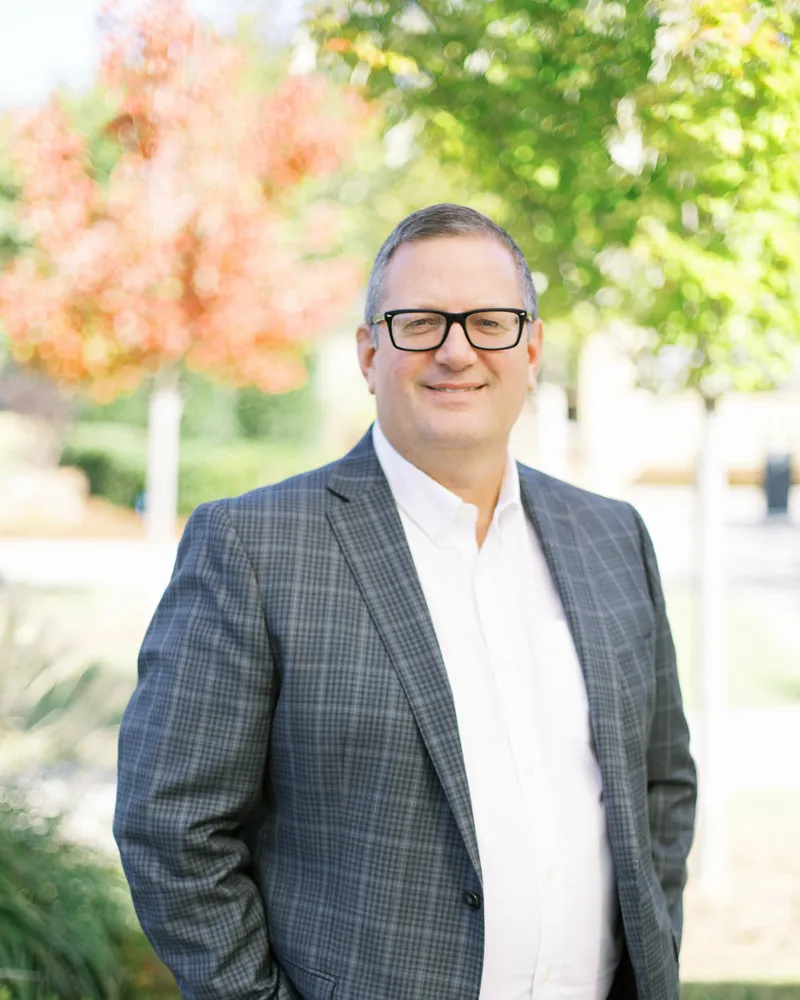
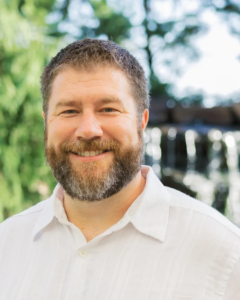
Oklahoma Christian’s director of international programs and assistant professor of communication, John Osborne, is the featured community member for this week’s edition of the Talon.
What is your history with Oklahoma Christian University?
“I came to Oklahoma Christian as a transfer student. I transferred in after my sophomore year, so I was here my junior and senior year. My wife and I got married after our sophomore year, so we transferred in as married students, and she completed her degree in elementary education, I completed my degree in communication. After we graduated, we moved to Japan and lived and taught in Japan for two years. And then we moved back to the U.S., we moved to Southern California, and I went to graduate school at Pepperdine University. After graduate school, I was recruited to work for a global nonprofit called ‘Let’s Start Talking’, and they were based on the Oklahoma Christian campus. We moved back to Oklahoma City, and when I was working for ‘Let’s Start Talking’, I got recruited to teach in the communication department as an adjunct professor, so I did that part time for six years. At the end of that time, I was approached by the university, inviting me to consider being the director of international programs, which I started in 2000. I became a professor of communication and director of international programs, and I’ve been here in those roles for the last 26 years.”
Where did your connection to Japan stem from?
“When Kelly and I were students here getting ready for graduation, Joe McCormack, who was my predecessor in this role as director of international programs, and he was chair of the language and literature department. He was a legend at OC. He approached Kelly and I and said, ‘Hey, would you consider going to Japan after you graduate?’ So we investigated the opportunity because we wanted to live overseas after we graduated. We were trying to decide if we were going to be missionaries or what was possible for us. We really liked the Japan opportunity, so we moved there immediately after we graduated. We lived and worked in the city of Mito, and we were there for two years. We didn’t have any experience with Japan, we had no awareness and no experience in Japan, so when we moved to Japan it was this sort of new out-of-the-blue thing for us. So I like to tell people, we didn’t choose Japan, Japan chose us. From that experience, Kelly and I came to deeply love Japan and the people of Japan. We had a tremendous experience, and after we returned and I came to OC, one of the things I was super pleased about was that OC had a long-term relationship with Ibaraki Christian University. Through that connection, we’ve done a 30th anniversary, a 40th anniversary, and two years ago our 50th anniversary in Japan, and it’s been fun to be a part of those celebrations and help grow and develop that. After I was in this role, the city of Mito asked me if I would refer English teachers for their public schools, like Joe McCormack did before me. They asked me if I would continue that, so for about 20 years, up until COVID, I was able to recommend OC graduates to go live and work and teach in Japan. I think perhaps the most significant connection was when Kelly and I were living in Japan, my parents and my younger brother, who was 14 at the time, came and visited us in Japan for three weeks… We got really connected to the Mito Church of Christ, and our last Sunday that we were there, we were talking to people after church, and we looked across the auditorium…to find out where my brother was, and he was standing over with the Japanese minister and the Japanese elders gathered around him. They had their hands on him, and they were praying for him. After we left and we went to lunch, I asked him, ‘Joel, what was that?’ And he said, ‘Oh, they were just praying for me to return to Japan as a full-time missionary.’ This is when he was 14. 10 years later, he moved to Japan as a full-time missionary when he was 24, and he’s been there 24 years now as a full-time missionary in Japan. It’s a deeply personal family commitment for our family to support Joel and his wife, it’s a deep sense of family pride for us.”
What do you view as the benefit that can be found in international travel for Oklahoma Christian students?
“The majority of students who are studying at OC come from the state of Oklahoma, and Oklahoma is a smaller state that’s in the middle of the U.S. Things are changing, but for a long time it was not a very diverse state, and it is so healthy for people to experience things outside their normal everyday life. It makes you see things in a new way beyond what you’ve seen before. I see this as a really important mission of this office to help our students to take OC to the world and to bring the world to OC, because there’s so many benefits from that. Not just getting a different perspective, but that different perspective changes things not only for you but it changes things for your kids, it’s an evolutionary, transformational experience. I like to tell students and their parents about the benefits of study abroad. I deeply believe in those, the increased levels of confidence that you have when you go to a culture that’s not your own and you figure it out… that just kind of grows individual confidence… So I think it’s a huge confidence booster for students, particularly in that 19, 20, 21-year-old range when you’re out there doing it, figuring it out. But I also think there’s really a stronger sense of clarity that happens outside your normal life, you are seeing things freshly, and so you’re thinking, ‘What type of person do I want to be?’, ‘What do I care about?’, ‘What are my values?’ Which creates some really wonderful confidence and clarity for students… Within the last year, maybe two years, a very famous technology person said that empathy was a weakness, and I completely disagree with that perspective. I think empathy is a strength. It’s very easy to dismiss other people and their situations if you don’t understand them. So learning from them builds understanding. And when you have understanding for someone else and their situation, I think that helps us be more empathetic towards other people. And I think our world needs more empathy, not less empathy.”
What has kept you at Oklahoma Christian for the last 26 years?
“There’s always lots of reasons to, and that changes over the course of 26 years. Ultimately, we loved being a part of the Oklahoma Christian University community, which played a big role in keeping us here. I’ve loved my job and had the ability to build and do some things that I was really interested in. When I first came to OC, one of my goals was to purchase and own a permanent location in Vienna. I could see other universities that had facilities and campuses that they owned in different countries, and I could see pretty clearly why that was a game changer in helping grow and develop your program. My goal was to do that in the first 10 years that I was here at OC. We were close to purchasing a place in 2008, and for a lot of reasons that didn’t happen. The global economic crisis that happened in 2008 was a contributing reason, but there were other reasons. We ended up not purchasing that facility, and I’m glad we didn’t get it because that allowed us to keep looking, and we found the place where we are now, and purchased it in 2012. My goal was to do it in 10 years, it took us 12 years but that’s fine because we found an ideal place in an ideal location for our study abroad programs. The ability to do that and to build and develop programs is something that I really enjoy. We’ve had the opportunity to shape programs, reshape programs, launch new programs, like we’re doing this summer with the African Studies program. One of the other things that’s really kept me here is our engagement with Rwanda, we offer graduate, and now an undergraduate, degree in Rwanda, and we’re starting a study abroad program in Rwanda. I’ve been very connected to and committed to our work in Rwanda, so that’s kept me engaged and committed. I mean that’s what’s kept us here, and now all of our children are here and my wife’s work with the church. She’s in a significant role with the church where we attend, she’s executive minister at the Springs Church of Christ, so if we were to move, it’s not just my role, it’s our roles. We’re in a place where we feel like we can contribute, and we’re thankful, and we’re very happy with ways that we’re able to be useful.”
What is something that you have learned from Oklahoma Christian?
“I’ve been here long enough that I’ve seen lots of change, and you know I’ve seen the highs of change, I’ve seen the lows of change. So I think one of the real benefits of that experience for me has been to understand that even through all types of change that happens, staying consistent, staying persistent. There’s times when we’ve had more resources in this office, and there’s times of less resources, but remaining consistent and persistent about the mission, really, after time, you get to see progress. That’s something that’s really satisfying. I’ve been here 26 years. I don’t know how much more time God gives me to continue to do this. Next year I turn 60, and so let’s pretend that I retire at a normal retirement age, so I’ve probably got somewhere around eight more years of work. I’ve got a lot of stuff I want to do in that last eight years, and that’s fueled by the experiences that I’ve had in the previous 20 plus years. There’s always more to do, there’s lots of good things to do, and I’m super excited about that.”





Be First to Comment